
Ardem vs Project Zomboid
Last verified 20 August 2026 against the official Steam store page and playardem.com.
Techtive Games describes Ardem as a 3D survival experience inspired by Project Zomboid, but less tedious. The headline difference is perspective: Ardem is first- and third-person 3D with a switchable view, where Project Zomboid is isometric. Ardem also ships 64-player servers and a dynamic electricity system, while Project Zomboid still wins on simulation depth and years of content.
Of Ardem's three stated inspirations, Project Zomboid is the one Techtive Games references most directly — describing Ardem as a 3D survival experience inspired by Project Zomboid, but less tedious. That framing is worth examining rather than repeating.
Side by side
| Ardem | Project Zomboid | |
|---|---|---|
| Status | Unreleased — EA targeted 2026 | Released, long-running Early Access |
| Perspective | First and third person 3D, switchable | Isometric 2.5D |
| Map | Minnowa, 64 km², handcrafted | Knox Country, very large, handcrafted |
| Multiplayer | Up to 64 players per server | Co-op and community servers, smaller scale |
| Base building | Deep — construction plus decoration | Deep — carpentry and fortification |
| Electricity | Dynamic — generators, solar, wind | Generators |
| Skill system | Long-term goal, not at launch | Extensive, central to progression |
| Simulation depth | Hunger, thirst, temperature, weather, clothing | Deeper — moodles, injuries, illness, traits |
| Permadeath framing | Not detailed; server-configurable | Central — “this is how you died” |
| Vehicles | Repair + modules and attachments | Repair and maintenance |
The perspective change is not cosmetic
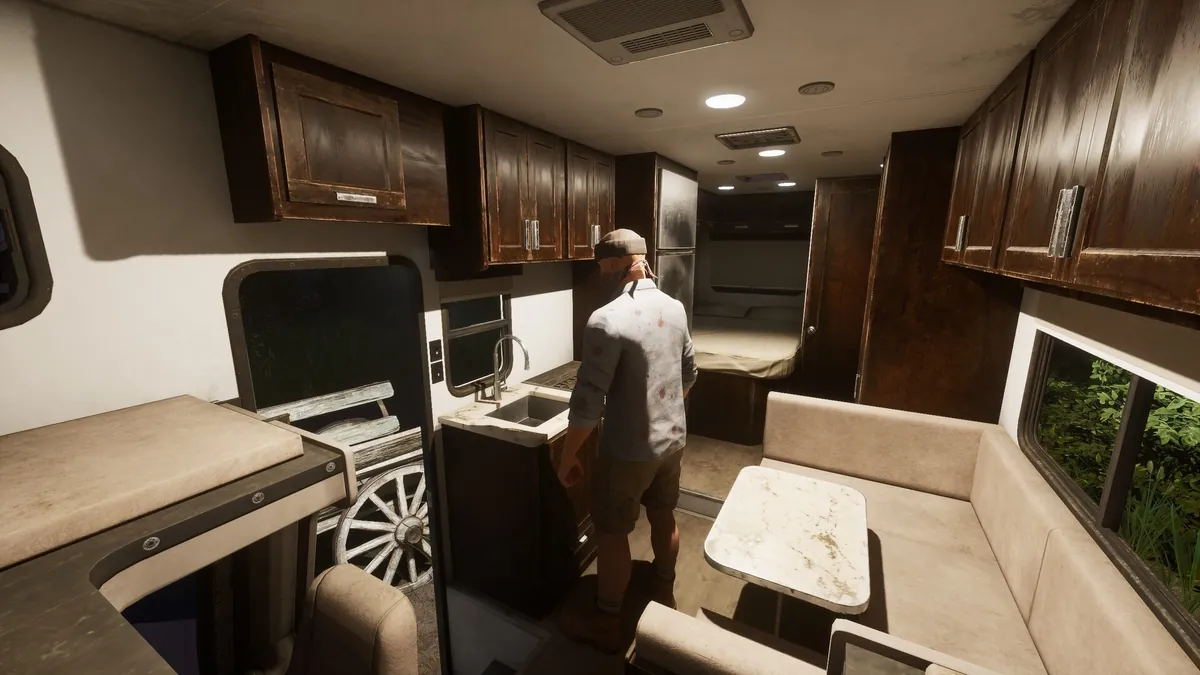
Moving from isometric to 3D changes the fundamental unit of information. Project Zomboid shows you a room and the space around it; Ardem shows you what your character can see. That converts a large part of Zomboid's tactical planning into moment-to-moment awareness — where a threat is behind you rather than visible at the edge of a tile.
Ardem also supports both first and third person with a keybind to switch, though some servers may restrict one view. That is a meaningful setting on PvP servers, where third person allows peeking around cover.
“Less tedious” — what that likely means
Techtive Games has described the intent but has not published the mechanics that deliver it. What follows is reading, not quoting.
Project Zomboid's difficulty is partly friction: reading skill books, long crafting chains, deep injury management, and a punishing early skill curve. The most likely reading of “less tedious” is that Ardem front-loads capability — and there is supporting evidence in the feature set. Techtive Games lists a skill system as a long-term goal rather than a launch feature, which means Early Access progression is gated by materials and tools, not by character levels.
That is a genuine design difference. In Zomboid, a new character is incompetent. In Ardem, a new character is simply poor. The first is a knowledge and grind barrier; the second is a logistics problem, and it is far friendlier to co-op groups where nobody wants to be the one who cannot build.
Multiplayer is the bigger structural difference
Project Zomboid's multiplayer is real but modest in scale. Ardem is built as a multiplayer game from the ground up: up to 64 players per server with a stated goal of 100+, a persistent 24/7 world, and owner-configured PvE, PvP, PvPvE or roleplay rulesets.
That changes what a base means. In Zomboid your base is mostly a private project. In Ardem it is a permanent feature of a shared landscape that other people will see, and possibly raid. See base building.
Where Project Zomboid still wins
Simulation depth and content maturity, and it is not close. Zomboid's moodles, traits, injury and illness modelling, skill trees and years of accumulated systems are far beyond anything Ardem has announced. Ardem confirms hunger, thirst, dynamic weather and a temperature-and-clothing simulation — solid, but a smaller surface.
Zomboid is also released, modded and stable. Ardem has no confirmed price and no exact release date.
Which to play
Project Zomboid for the deepest survival simulation available, if you enjoy systems mastery and do not mind friction. Ardem for that philosophy in 3D at 64-player scale, with electricity and construction as the progression spine — and less grind between you and being useful.
The public playtest on 15 October 2026 is free and needs no invite, so you can answer this yourself. See also Ardem vs DayZ.
Key takeaways
- Techtive Games describes Ardem as 3D survival inspired by Project Zomboid, but less tedious.
- The perspective shift from isometric to 3D changes tactical planning into moment-to-moment awareness.
- Ardem's skill system is a long-term goal, so early progression is gated by materials, not levels.
- Ardem scales to 64-player persistent servers; Zomboid's multiplayer is smaller.
- Project Zomboid still wins clearly on simulation depth and years of content.
Frequently asked questions
Is Ardem a 3D Project Zomboid?
That is close to how the developer frames it — the same survival philosophy in 3D, with the grind reduced.
Does Ardem have permadeath like Project Zomboid?
Death rules have not been detailed publicly, and on servers they are likely to be part of the owner-configurable ruleset.
Does Ardem have a skill system like Project Zomboid?
Not at launch. Techtive Games lists a skill system as a long-term goal, so Early Access progression is gated by materials and tools rather than by character levels.